

Quick answer
Snorkeling Long Island Whitsundays centers on Sandy Bay and Palm Bay, where fringing reef lies 20 to 50 meters from shore in water shallow enough to stand. Entry to Long Island National Park is free, though most visitors arrive by resort transfer or day-trip vessel since there is no public ferry. Visibility peaks between 08:00 and 16:00 when sunlight penetrates the water column and tide movement is minimal.
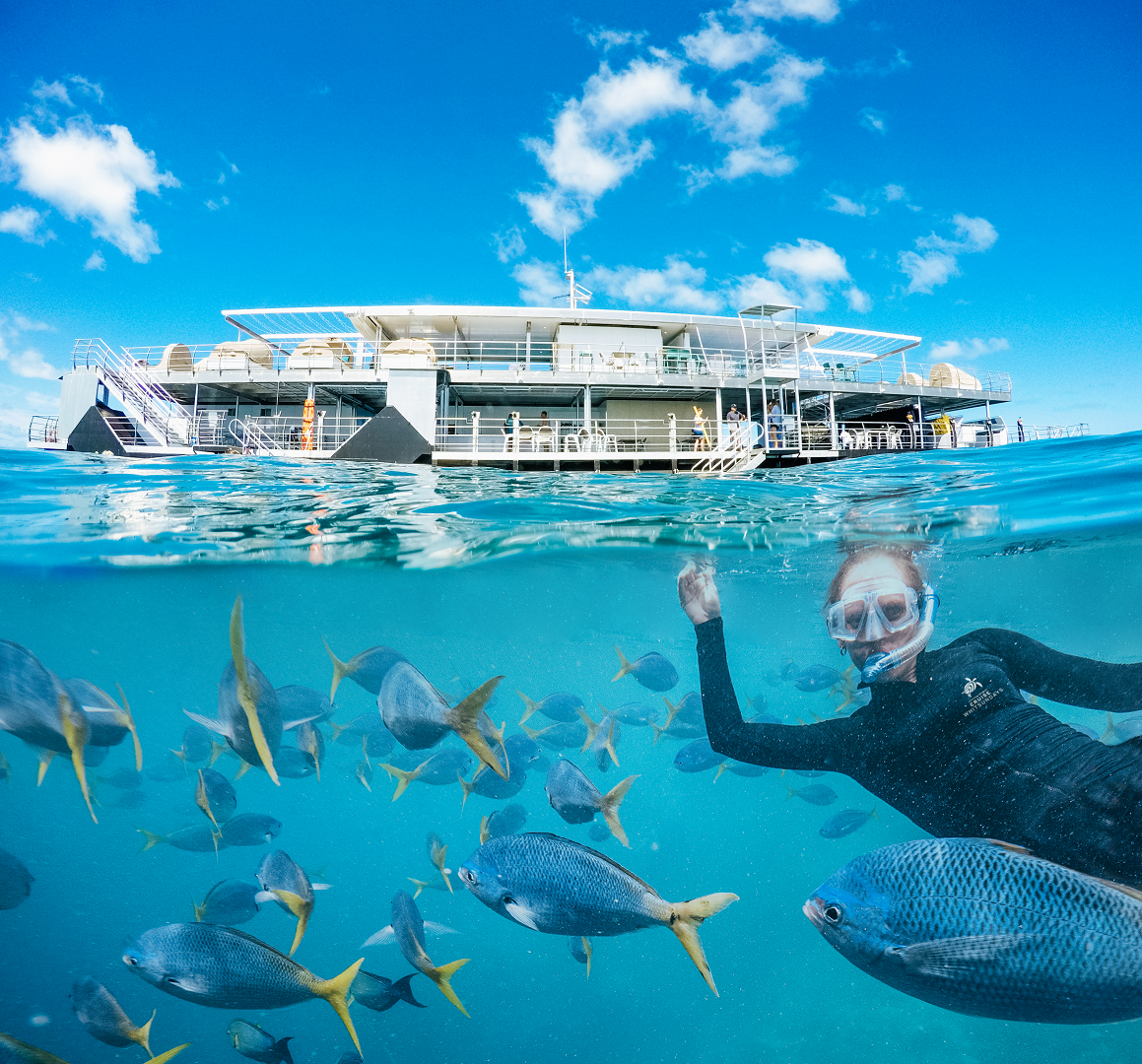
Long Island holds the only private resorts within Whitsunday Islands National Park boundaries, which means the fringing reef here sees lighter traffic than Whitehaven Beach or Hamilton Island's southern points. The coral grows in distinct bands: staghorn and plate corals in the shallows, then brain and boulder formations as the seabed slopes toward the channel. Surgeonfish, parrotfish, and wrasse patrol the reef edge throughout the day, while turtles surface near the western bays during morning hours. Sandy Bay on the western shore offers the simplest shore entry, with a gradual sand shelf that transitions to coral rubble at the 3-meter mark. The reef proper starts where the rubble ends, forming a continuous line parallel to the beach. Palm Bay to the north has a narrower beach but faster depth gain, meaning you reach live coral within 15 meters of the waterline. Both sites remain diveable across most tide phases, though low spring tides expose the shallow coral crowns and force snorkelers to swim further out. Access to Long Island depends on your starting point. Resort guests walk directly from their accommodation to the beach. Day visitors join a scheduled transfer from Shute Harbour or Hamilton Island, typically part of a multi-island snorkel itinerary that includes lunch and reef interpretation. Independent boaters can anchor in the designated zones off Sandy Bay, where holding is good in sand over a coral base. National park rules prohibit anchoring on live coral, so check your position before setting the hook. The island's position inside the outer reef line shields it from southeasterly swell, which makes snorkeling here viable even when conditions deteriorate elsewhere in the group. Winter months deliver the clearest water, often exceeding 20 meters visibility, while summer brings plankton blooms that reduce clarity but increase fish activity. Stinger nets are not deployed at Long Island, so full-body suits are standard from November through May.
“The fringing reef at Long Island runs parallel to shore in water shallow enough to stand, a rarity among the Whitsunday group.”
Best Time for Snorkeling Long Island Whitsundays
The best time for snorkeling Long Island is within the arrival window of 08:00–16:00, when daylight offers optimal visibility for underwater exploration and navigation of island trails. Planning your visit around these hours ensures you experience the reef during peak light conditions and favorable tidal movements.
Daily 08:00–16:00
Low to ModerateClear light and high visibility
This window provides the best conditions for snorkeling and walking trails.
September to November
ModerateWarm, 23°C to 28°C
Spring offers stable weather and comfortable water temperatures before the summer heat.
December to March
HighHumid, 25°C to 31°C
These months see warmer water but higher humidity and potential for jellyfish presence.
April to August
ModerateCooler, 19°C to 26°C
Winter provides clear, calm water and lower humidity for comfortable outdoor activities.
Verdict: For the best experience, plan your visit between April and May or September and October, arriving within the 08:00–16:00 window.
Getting There: How to Access Snorkeling Long Island Whitsundays
Long Island is situated within the Whitsunday Islands National Park, accessible exclusively by watercraft. Visitors typically reach the island via commercial boat transfers departing from mainland hubs such as Shute Harbour or Airlie Beach.
Transfer from Shute Harbour to Long Island Resort Jetty
Transfer from Port of Airlie to Long Island
Public moorings available off Long Island coastline
Etiquette for Snorkeling Long Island Whitsundays
Long Island sits within the Great Barrier Reef Marine Park, where conduct directly impacts fragile coral ecosystems and marine life. Following marine park regulations protects the reef for future snorkelers.
Do
- Use reef-safe sunscreen without oxybenzone or octinoxate
- Keep a safe distance from coral and marine animals
- Take all rubbish back to the mainland
- Follow Marine Park Authority signage and zoning rules
- Snorkel with a buddy for safety
- Report injured wildlife to park rangers
Don't
- Touch, stand on, or collect coral or shells
- Feed fish or marine animals
- Use chemical sunscreens that damage coral
- Anchor boats on coral patches
- Chase or corner turtles and rays
- Leave fishing line or plastic waste
Visitor Access Hours: Snorkeling Long Island Whitsundays
Long Island National Park is open to visitors throughout the week. Access is available at all times during the day and night.
| Monday | 00:00–23:59 | |
|---|---|---|
| Tuesday | 00:00–23:59 | |
| Wednesday | 00:00–23:59 | |
| Thursday | 00:00–23:59 | |
| Friday | 00:00–23:59 | |
| Saturday | 00:00–23:59 | |
| Sunday | 00:00–23:59 |
Check availability
Frequently asked questions about snorkeling long island whitsundays
Everything you need to know about snorkeling long island whitsundays